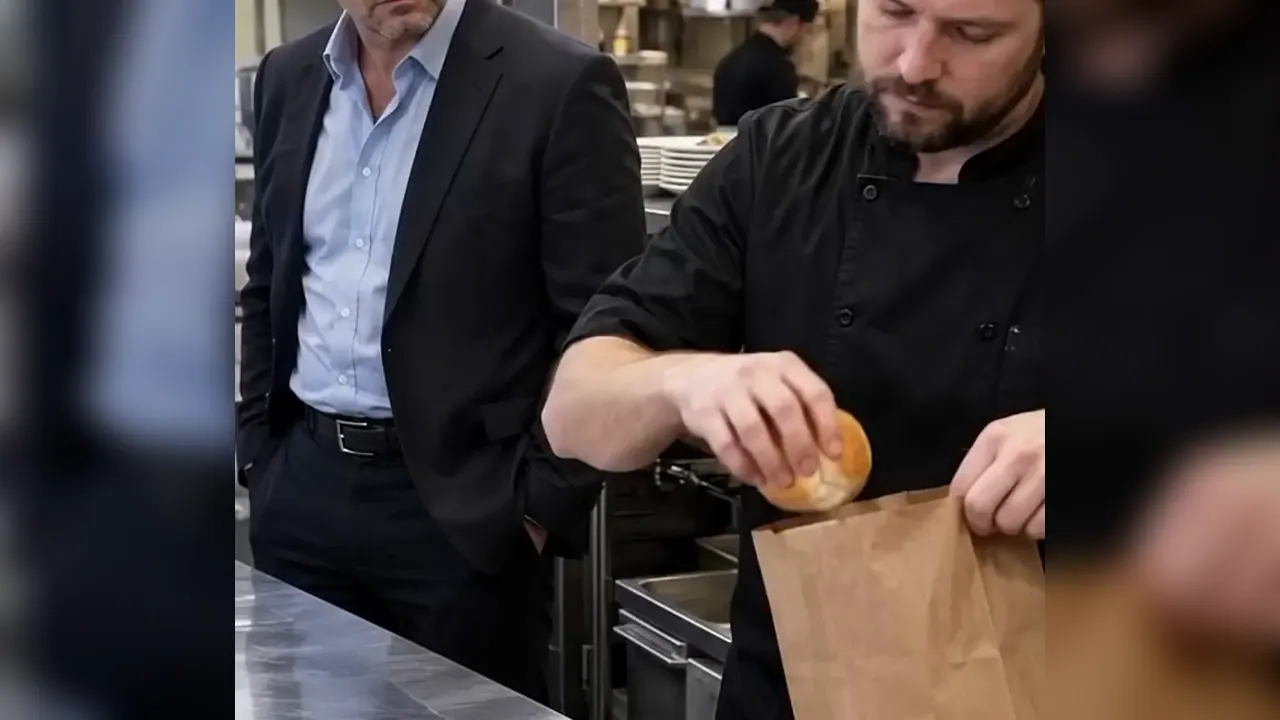
A Confrontation Over Bread In The Kitchen
Bright fluorescent lights illuminated the stainless steel counters inside the busy commercial kitchen.
A cook wearing a black uniform and cap stood beside a metal warming tray.
Several round loaves of baked bread rested inside the deep silver pan.
The cook unfolded a brown paper grocery bag with both hands.
A man dressed in a dark suit jacket and open collar shirt stood nearby.
Suddenly, the suited man stepped closer and stared down at the paper bag.
“What are you doing with that bread?” he asked.
The cook stopped his hands and looked down at the open paper sack.
“It was going to be thrown away,” the cook answered softly.
The manager furrowed his brow and pointed directly toward the worker.
He asked if the worker thought taking items without permission was acceptable.
The cook lowered his gaze toward the steel floor beneath his feet.
The suited manager crossed his arms firmly across his blue buttoned shirt.
“Don’t take anything without permission,” the manager said.
The cook held the brown bag tightly against his waist and nodded slowly.
“Yes, sir,” the cook replied quietly.
He turned away and carried several dirty plates toward the deep wash sink.
A Quiet Phone Call In The Hallway
The cook sat down upon an overturned plastic crate in the back hallway.
Tall metal storage shelves filled with clean white towels stood directly beside him.
He pressed a small silver mobile phone against his right ear.
His shoulders slumped forward while he spoke in a low and steady voice.
He mentioned an overdue utility bill to the person on the other end.
The suited manager walked slowly down the tile hallway from the main kitchen.
He paused several paces away and watched the seated worker through the doorway.
The cook encouraged the caller to keep working on a school assignment.
He smiled faintly into the receiver despite the obvious worry across his face.
“I love you too,” the cook whispered into the phone.
He closed the phone and rubbed his tired eyes with one hand.
The manager turned around silently and walked back toward the front dining area.
His expression shifted from stern annoyance to quiet and thoughtful concern.
He kept his hands tucked deep inside his dark suit jacket pockets.
A New Policy Announced To The Staff
Later that afternoon, the manager gathered the kitchen crew around a wooden prep table.
Six staff members in black chef coats stood listening to his words.
A chalkboard on the wall displayed daily slogans about good food and great service.
The manager held a small black notebook firmly in his left hand.
He announced that remaining kitchen food would now be distributed fairly among everyone.
The kitchen staff nodded quietly in agreement with the new workplace rule.
The manager turned his attention across the table toward the cap-wearing cook.
“Can I speak with you?” the manager asked.
The cook stepped away from the crowd and followed him toward the prep counter.
The other kitchen workers dispersed back toward their various cooking stations.
Steam rose quietly from the metal pans resting on the hot stoves nearby.
The manager waited until the surrounding aisle was clear of other staff.
An Unexpected Apology By The Sink
The manager stopped beside a cart stacked with clean white porcelain plates.
He turned directly toward the cook, who held the brown bag again.
“I owe you an apology,” the manager said plainly.
The cook looked up with a surprised and uncertain look in his eyes.
The manager placed a gentle hand upon the worker’s black sleeve.
He explained that he had focused too much on protecting restaurant supplies.
He admitted that he should have asked questions before jumping to harsh conclusions.
The cook adjusted his black cap and listened carefully to every word.
He agreed that asking permission before taking food was still the proper procedure.
He confessed that admitting personal struggles at home felt very difficult to do.
The manager kept his hand resting lightly against the worker’s shoulder.
He encouraged the employee to speak up whenever workplace burdens became too heavy.
He reminded him that no one should have to struggle alone in silence.
The cook gave a small, appreciative nod as his posture relaxed visibly.
“Thank you for your hard work,” the manager stated warmly.
Baking Together At The Family Kitchen Table
In a brightly lit home kitchen, sunlight streamed through a tall wooden window.
A young girl wearing a floral apron stood beside a wide wooden table.
The cook smiled beside her while whisking yellow batter inside a glass bowl.
Two slices of toasted bread sizzled gently inside a black skillet on the stove.
The girl laughed happily as she spoke about her current school baking project.
Together, they flattened soft beige cookie dough across the dusted wooden tabletop.
The girl pressed metal heart-shaped and star-shaped cookie cutters into the smooth dough.
Flour dusted her small fingers as she lifted each cut shape with care.
They placed freshly baked cookies onto a wide metal baking sheet to cool.
White frosting and colorful sprinkles decorated the top of each sweet treat.
The girl packed several finished pastries inside a clear plastic storage container.
She held up a small cellophane bag filled with golden homemade cookies.
She suggested giving a special portion directly to her father’s restaurant employer.
Her father smiled warmly and tied the top of the package with string.
A Special Gift Returned To The Kitchen
The cook returned to the restaurant kitchen carrying a fresh brown paper sack.
A small white paper tag was taped securely to the front of the bag.
Handwritten lettering on the label carried a warm personal note for the manager.
The cook approached the suited manager standing beside the clean dishwashing station.
He extended the paper bag forward with both hands toward his boss.
“I wanted to give you something,” the cook said with a smile.
He explained that his young daughter had helped bake the fresh bread at home.
He shared how she insisted on preparing an extra loaf for his workplace.
The manager accepted the package and looked down at the handwritten note.
A broad smile appeared across the manager’s face as he held the gift.
“Please thank her for me,” the manager replied with genuine gratitude.
The cook nodded happily and thanked the manager for his continued understanding.
Both men shared a lighthearted laugh beside the stainless steel prep counter.
Leftovers Offered With A Kind Word
A short time later, the manager walked over carrying a large plastic container.
Inside the clear lidded tub sat half a dozen freshly baked golden rolls.
He handed the container directly into the cook’s open hands.
He noted that the worker’s daughter might enjoy having them for morning breakfast.
The cook held the plastic tub carefully and thanked his boss once again.
He admitted that the initial confrontation had initially made him feel deeply judged.
He added that hearing the manager’s sincere apology completely changed his perspective.
He noted that everyone makes mistakes and possesses the ability to improve.
The manager smiled warmly and agreed with the cook’s thoughtful observation.
Both men stood side by side in the orderly and peaceful kitchen environment.
The manager offered a final encouraging smile before stepping back to inspect the line.
The cook carefully placed the container of bread beside his personal belongings.
The Meaning Behind This Kitchen Encounter
The interaction highlights how quickly assumptions can damage trust inside a busy workplace.
A brief moment of observation revealed personal circumstances that altered an initial harsh judgment.
A sincere apology opened the door to mutual respect and genuine human connection.
Small physical gestures and honest conversations helped defuse tension between supervisor and employee.
This video presents a fictional cinematic story designed to illustrate leadership and workplace understanding.
In real-world settings, clear workplace policies regarding surplus food prevent confusion and conflict.
Employees experiencing severe financial hardship should consult available community support programs and workplace representatives.
Managers benefit from listening to team members before enforcing strict disciplinary measures.
The story begins with an uncomfortable reprimand and ends with shared generosity and understanding.
Send this to someone who strives to lead with understanding rather than snap judgments.