An Urgent Call At The Garage
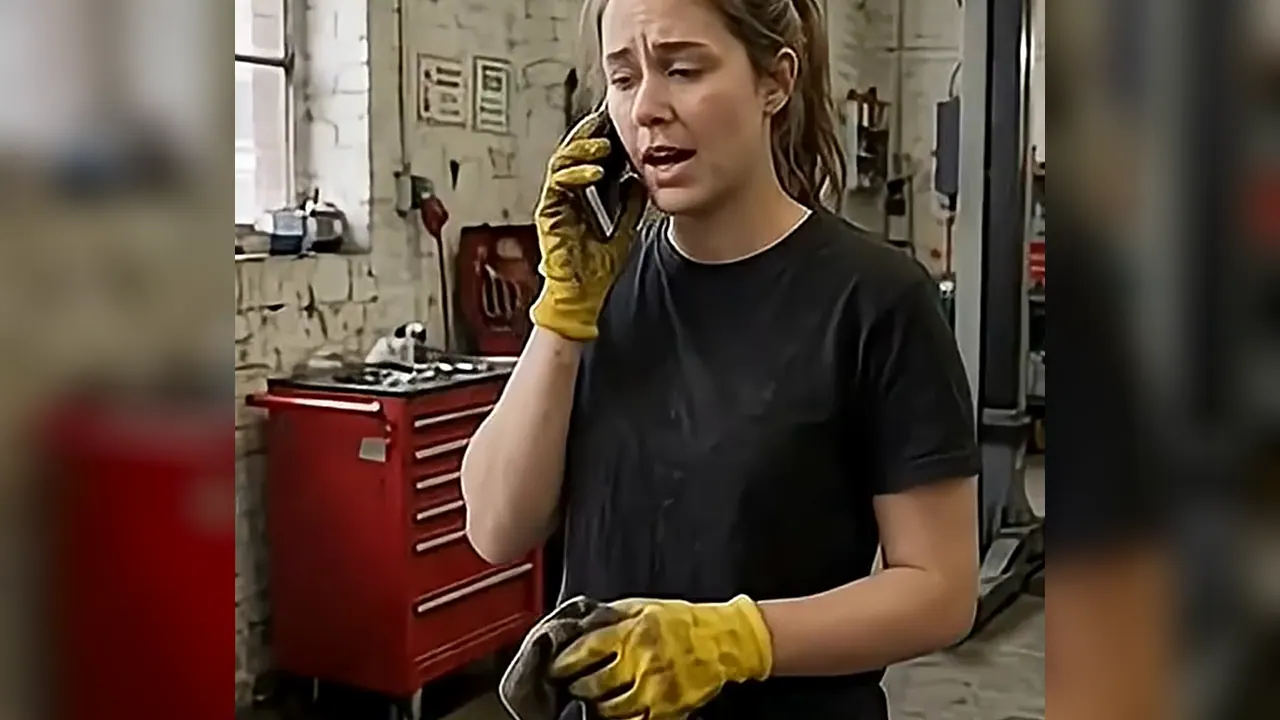
A quiet garage interior stood filled with tall concrete pillars and high frosted windows.
A red rolling tool chest rested near the pale brick workshop wall.
A young woman wore a black short-sleeved shirt and dark work trousers.
She held a dark smartphone firmly against her right ear.
Yellow work gloves covered both of her hands as she held a gray cloth.
Her face showed complete attention as she listened to the speaker on the line.
“Hello?” she said into the phone receiver.
She nodded slightly while waiting for the caller across the line to respond.
“Yes, this is Emma’s Garage,” she answered steadily.
Her brow furrowed slightly as the distant voice shared distressing details.
The caller sounded troubled and spoke about an unfortunate situation along the highway.
The young mechanic listened patiently without interrupting the caller’s explanations.
She lowered the rag slightly toward her waist while maintaining her firm grip.
Her dark eyes remained fixed on the concrete floor in deep concentration.
A Stranded Vehicle By The Countryside
Out along a narrow asphalt country lane, gray clouds hung across the pale sky.
An older woman with short gray hair stood near the edge of the road.
She wore round eyeglasses, a long beige overcoat, and a green knitted scarf.
Dark trousers and sturdy walking shoes kept her warm against the cool outdoor air.
Behind her sat a dark gray station wagon parked on the gravel shoulder.
The vehicle showed severe damage along the front right bumper and hood.
The front metal panel was crushed inward toward the headlight assembly.
“My car is badly damaged,” the older woman spoke softly into her phone.
She brought one hand up to adjust her glasses against her face.
“Everyone says to send it to the junkyard,” she continued with sadness.
She looked down at the crushed metal fender of her family car.
Her eyes blinked through her lenses as she wiped away a small tear.
She held the mobile device tightly while awaiting an answer from the garage.
Arrival Of The Flatbed Recovery Truck
Soon a white commercial recovery truck pulled onto the narrow roadside shoulder.
Amber warning lights flashed quietly across the cab roof of the large truck.
The mechanic opened the driver side cab door and stepped down onto gravel.
She had her hair tied neatly back into a practical low ponytail.
She firmly shut the driver door behind her with a dull metallic click.
The older woman stood waiting quietly near the rear corner of the car.
The mechanic walked past the tow bed directly toward the crumpled front end.
She knelt down slightly to inspect the crumpled bumper and fractured plastic trim.
She tapped gently against the side panel to check the underlying metal frame.
The older woman watched closely while holding her phone near her chest.
“Don’t worry,” the young mechanic said with a warm, reassuring smile.
“I’ll fix it,” she promised quietly before standing up straight.
The older woman nodded with relief as the mechanic returned toward the truck.
Securing The Damaged Vehicle For Transport
The mechanic hooked a heavy steel winch cable to the front recovery loop.
She stood alongside the metal ramps holding an electronic winch remote control unit.
With a push of a button, the motorized winch cable pulled tight.
The gray station wagon slowly rolled upward along the flatbed metal surface.
Its tires turned smoothly as the cable guided it onto the truck bed.
The older woman stood safely behind the vehicle, observing the entire loading operation.
The car came to a complete stop securely atop the flatbed floor.
The mechanic knelt beside the rear wheel to attach a heavy yellow strap.
She threaded the thick fabric webbing into a heavy-duty steel ratchet mechanism.
With firm, rhythmic motions, she pumped the handle until the strap became rigid.
The vehicle rested securely in place, ready for the trip back to town.
She checked the tension by hand to ensure absolute safety during transport.
The flatbed truck then began its journey back to the workshop bay.
Initial Inspection Inside The Garage
Back inside the garage, the station wagon rested upon an elevated hydraulic vehicle lift.
The mechanic held a small black handheld flashlight up toward the damaged bumper.
The left headlamp glowed brightly with a strong white illumination.
“Okay,” she said softly as she clicked the flashlight into action.
“Let’s see how bad it is,” she noted while inspecting the cracks.
She aimed the narrow beam of light into the crushed metal panel crevices.
She touched the cracked clear plastic casing of the shattered headlight unit.
The metal hood remained buckled upwards, leaving an uneven gap along the engine.
She walked around the front apron, checking the internal support framework carefully.
She determined which parts required removal, replacement, or thorough structural reshaping.
Her inspection confirmed that the vehicle could indeed be restored through focused labor.
Disassembly And Reshaping The Bodywork
The mechanic selected a metal socket wrench from her nearby tool cart.
She knelt beneath the damaged front apron to loosen the lower mounting bolts.
Turn after turn, the stubborn steel fasteners backed out from the underbody.
She collected each screw carefully and placed them onto the concrete floor.
With both hands gripping the bumper cover, she pulled the damaged shell away.
The plastic skin detached, exposing the radiator core and structural bumper rebar.
She set the damaged bumper aside to access the inner crumpled fender.
Taking up a specialized body hammer and shaping dolly, she began metal reshaping.
She struck the underside of the fender panel with measured, consistent blows.
The bent sheet metal gradually flattened and returned toward its original smooth contour.
Each hammer strike smoothed out creases left behind by the forceful impact.
She ran her gloved palm over the surface to check for any imperfections.
A satisfied smile appeared on her face as the panel regained shape.
Welding And Grinding The Structural Frame
Safety equipment was prepared before the hot structural metal repairs commenced.
The mechanic lowered a dark protective welding helmet over her entire face.
She picked up a MIG welding torch connected to a flexible power cable.
Bright blue and white sparks erupted as she welded the metal framework.
The heat fused the cracked structural steel back into a solid single piece.
Once the welding was finished, she flipped up her protective welding visor.
She wiped away a thin smudge of soot from her left cheekbone.
Next, she gripped an electric angle grinder tightly with both gloved hands.
She pressed the rotating abrasive disc against the fresh, raised metal weld.
A glowing shower of golden sparks cascaded across the garage floor.
She ground the seam flat until the metal felt completely flush and smooth.
The structural repair was now strong, rigid, and completely seamless.
Sanding And Applying Fresh Paint
The repair process shifted to surface refinement inside the prep area.
The mechanic wore a white particulate face mask to protect her breathing.
She gripped a flat sanding block wrapped with fine-grit abrasive automotive paper.
With firm, circular strokes, she smoothed out the layer of light gray filler.
The surface became completely flat, seamlessly blending into the original factory contour.
She picked up a clean microfiber cloth and wiped away the fine dust.
The car was then moved inside a brightly lit professional spray booth.
She donned a full white protective painter suit and specialized vapor respirator.
Holding a pneumatic spray gun, she swept a steady mist of primer paint.
Even, overlapping strokes coated the repaired hood and fender in matching gray lacquer.
The high-gloss finish matched the factory metallic paintwork across the entire car.
The vehicle dried thoroughly beneath the warm, filtered air of the booth.
Reassembly And Mechanical Finishing
The painted bodywork returned to the main bay for final mechanical reassembly.
The mechanic used a pneumatic cordless driver to fasten new trim pieces.
She carefully aligned a replacement headlight assembly into its factory mounting bracket.
She adjusted the hood alignment, pressing down gently until it latched securely.
She stepped back to evaluate the symmetric panel gaps along the fenders.
She bent down to switch on the front illumination circuits.
The new headlight beam shone brightly, throwing a crisp, even white light.
“Perfect,” she remarked happily while admiring the restored front facade.
She picked up an electric rotary buffer with a soft yellow polishing pad.
She buffed the freshly painted panels with circular sweeps of polishing compound.
The older woman stood nearby in her beige coat, watching with quiet delight.
The mechanic wiped the hood with a clean towel, revealing a mirror reflection.
The Joyful Reunion And Departure
The completed station wagon stood parked outside the garage on the driveway.
Its gray metallic paint gleamed brightly under the soft afternoon sunlight.
The older woman walked slowly around the front of her fully restored car.
She ran her gloved hand gently across the smooth, pristine front fender.
“You gave my car a new life,” the older woman said warmly.
She looked up with deep gratitude in her kind, smiling eyes.
“Thank you,” she added with genuine appreciation in her voice.
“You’re welcome,” the young mechanic replied with a bright, humble smile.
The older woman reached out and embraced the mechanic in a hug.
The mechanic wrapped her arms around the customer with joyful warmth.
Both women smiled happily as the vehicle stood ready for the open road.
The Meaning Behind This Restorative Encounter
The visual narrative captures the transformation of a severely compromised machine into roadworthy condition.
Each step in the repair highlights deliberate manual skill, technical dedication, and patience.
The interaction between the two individuals provides a heartfelt emotional center throughout the footage.
Viewers see how attentive craftsmanship can reverse destruction that seemed entirely permanent.
This production represents a fictional cinematic story designed to highlight trade craft and compassion.
In real life, drivers facing structural vehicle damage should always seek certified collision evaluations.
Proper towing procedures and frame alignment checks ensure vehicles remain safe for highway use.
What began as a hopeless roadside breakdown concluded with renewed purpose and a joyful embrace.
Know someone who appreciates true craftsmanship and second chances? Send them this.